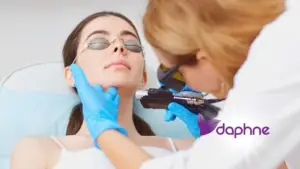
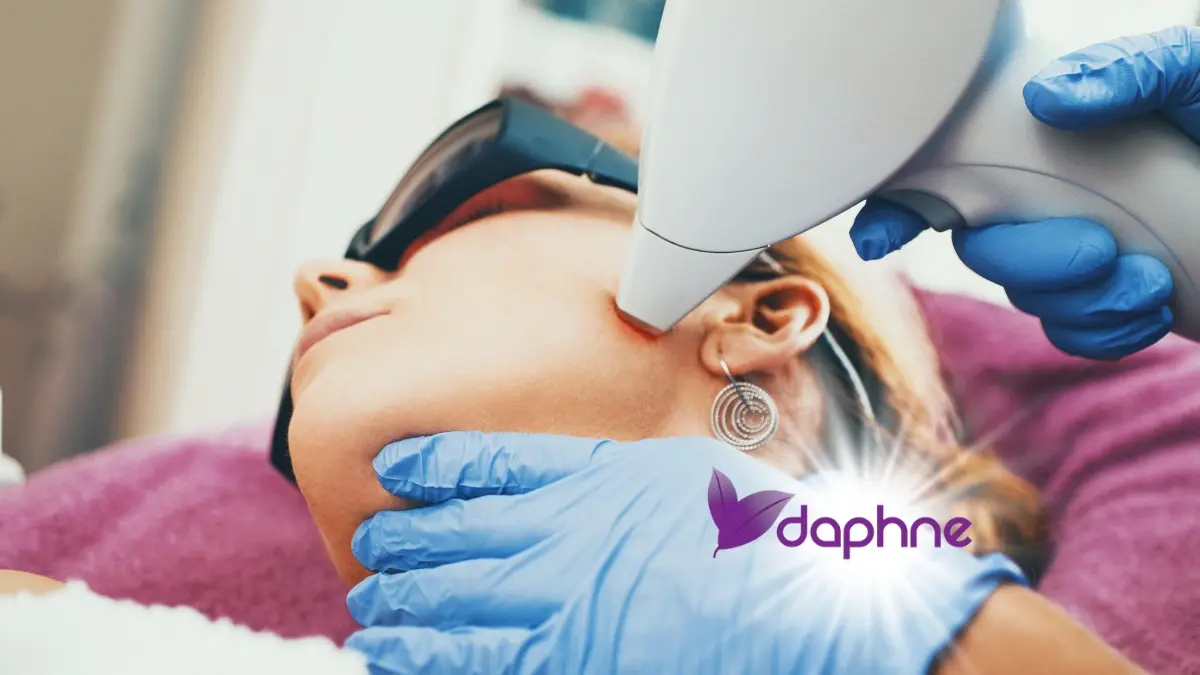
Diode laser hair removal is one of the laser hair removal methods that uses laser energy at approximately 808–810 nm to target melanin within the hair and the hair follicle. Because this wavelength can penetrate relatively deeper into the skin, it can be particularly effective for deeply rooted and coarse hair.
Diode laser can be used on different skin tones with an appropriate device and individually selected energy settings. Particularly on darker skin tones, it may offer advantages over Alexandrite laser for some people. Tanning status, skin tone, hair color and hair thickness should always be assessed before treatment.
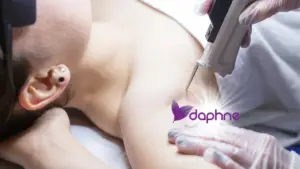
Some Diode laser systems can use a rapid scanning or in-motion technique, in which the handpiece is continuously moved across the skin. This technique allows laser energy to be distributed in a controlled manner across the treatment area and may help make the treatment of larger areas more comfortable.
Effective contact or external skin cooling systems may help reduce sensations of heat, stinging and discomfort during treatment. However, comfort levels may vary depending on the treatment area, hair density, energy used and individual sensitivity.
Diode laser can be used on body areas such as the back, shoulders, arms, legs, underarms and intimate area. Laser hair removal may be less effective on very fine, very light-colored, white or gray hair. We select the laser system individually according to skin tone, hair color, hair thickness, follicle depth and treatment area.
How Long Do Diode Laser Hair Removal Results Last?
Hair reduction achieved with Diode laser hair removal can last for a long time. After completing a laser hair removal course, long-term hair reduction may be seen in a significant proportion of the targeted hair follicles. However, no laser system guarantees that all hair will disappear completely for life. Over the years, some hair may reappear or previously inactive hair follicles may become active.
Results can last for many years
Hair follicles successfully targeted with Diode laser may show long-term reduction. After completing the sessions, a significant proportion of the hair may not regrow for a long period, while remaining hair may become less dense and finer.
Multiple sessions are required
Because hairs are in different stages of the growth cycle, long-term reduction is not achieved with a single session. Depending on hair characteristics, treatment area and individual response, a course of multiple sessions is generally required.
Long-term reduction in targeted follicles
Hair follicles that are sufficiently affected by laser energy may have a reduced ability to produce strong hair again. As a result, hair density in the same treatment area may decrease significantly over time.
Hormones can influence new hair growth
Hormonal changes, genetic characteristics and individual factors may cause previously inactive hair follicles to become active in later years. Particularly in hormone-sensitive areas, new or fine hair may appear over time.
Results vary from person to person
The long-term effect of Diode laser may vary according to hair color, hair thickness, skin tone, treatment area, hormonal status and the number of completed sessions. Therefore, it is not appropriate to guarantee the same duration or the same degree of hair reduction for everyone.
Maintenance sessions may be needed
After completing the initial treatment course, some people may require maintenance or touch-up sessions for occasional new hairs that appear over time. This need varies from person to person, and regular yearly sessions are not necessary for everyone.
In short: Diode laser hair removal can provide significant and long-term hair reduction in suitable skin and hair types. Results may last for many years, but hormonal changes or newly activated hair follicles may cause a small number of new hairs to appear over time. Maintenance sessions can be performed when needed.
Does Diode Laser Hair Removal Permanently Remove Hair?
Diode laser hair removal does not guarantee that all hair will be completely eliminated for life. However, with suitable skin and hair characteristics and regular sessions, it can provide significant and long-term hair reduction. During the treatment course, hair may grow back less densely, grow more slowly and some remaining hairs may become finer.
Long-term reduction is the goal
The aim of Diode laser is to target hair follicles in the active growth phase with laser energy and gradually reduce hair density. The result should be understood not as the complete disappearance of every hair, but as significant and long-term reduction.
Multiple sessions are usually required
Because not all hairs are in the active growth phase at the same time, one session is not sufficient. Depending on hair characteristics, treatment area and individual response, approximately 6–8 sessions may be planned for many body areas. Some people may need additional sessions.
Remaining hair may become finer
As sessions progress, hair density may decrease, the interval before regrowth may become longer and remaining hairs may become finer. The degree of change varies according to hair color, hair thickness and treatment area.
Hormones can affect the result
Hormonal factors, genetic characteristics and individual circumstances may cause new hair to grow or existing hair to become stronger again. Particularly in hormone-sensitive areas such as the face, chin and neck, more sessions may be required.
Not every hair type responds the same way
Diode laser can more easily target hair containing dark pigment. Very light-colored, white or gray hair contains less melanin, so laser hair removal may be less effective. Very fine hair should also be assessed individually.
Maintenance sessions may be required
After the initial course has been completed, some people may require maintenance sessions for new or occasional hairs appearing over time. This depends on the treatment area, hormonal status and long-term individual response.
In short: Diode laser does not guarantee complete removal of every hair. With suitable skin and hair characteristics and regular sessions, the aim is significant and long-term hair reduction. The number of sessions and the result achieved may vary from person to person depending on hair characteristics, skin tone, treatment area and hormonal factors.
Diode Laser Hair Removal Prices in Munich
Diode laser hair removal prices in Munich are determined by the treatment area. The choice of laser system does not change the listed price for the same area. The amounts below are Daphne Laser Munich’s current Euro prices.
Each table includes prices for one, three and six sessions. Package prices apply to multiple-session bookings for the same treatment area. The prices were updated on July 26, 2026.
| Treatment Area | 1 Session | 3 Sessions | 6 Sessions |
|---|---|---|---|
| Upper Lip | €35 | €95 | €168 |
| Chin | €45 | €122 | €216 |
| Full Face | €99 | €267 | €475 |
| Underarms | €59 | €159 | €283 |
| Full Arms | €139 | €375 | €667 |
| Classic Bikini Area | €79 | €213 | €379 |
| Full Intimate Area | €119 | €321 | €571 |
| Lower Legs Including Knees | €159 | €429 | €763 |
| Full Legs | €239 | €645 | €1,147 |
| Full Back | €189 | €510 | €907 |
| Treatment Area | 1 Session | 3 Sessions | 6 Sessions |
|---|---|---|---|
| Upper Lip | €42 | €113 | €202 |
| Chin | €54 | €146 | €259 |
| Full Face | €119 | €321 | €571 |
| Underarms | €71 | €192 | €341 |
| Full Arms | €167 | €451 | €802 |
| Classic Bikini Area | €95 | €257 | €456 |
| Full Intimate Area | €143 | €386 | €686 |
| Lower Legs Including Knees | €191 | €516 | €917 |
| Full Legs | €287 | €775 | €1,378 |
| Full Back | €227 | €613 | €1,090 |
You can view other areas on our Munich Laser Hair Removal Prices page. Your individual total cost depends on the selected treatment areas and number of sessions.
Diode Laser Hair Removal in Other Languages
You can read the same information about Diode laser hair removal in our other language versions.