
Laser Hair Removal
Full Body Laser Hair Removal
Munich · Full Body · Women and Men · Area-Based Plan Full…
Devamını oku
Enter a search term and press Enter. Results will open on the search page.
Tag
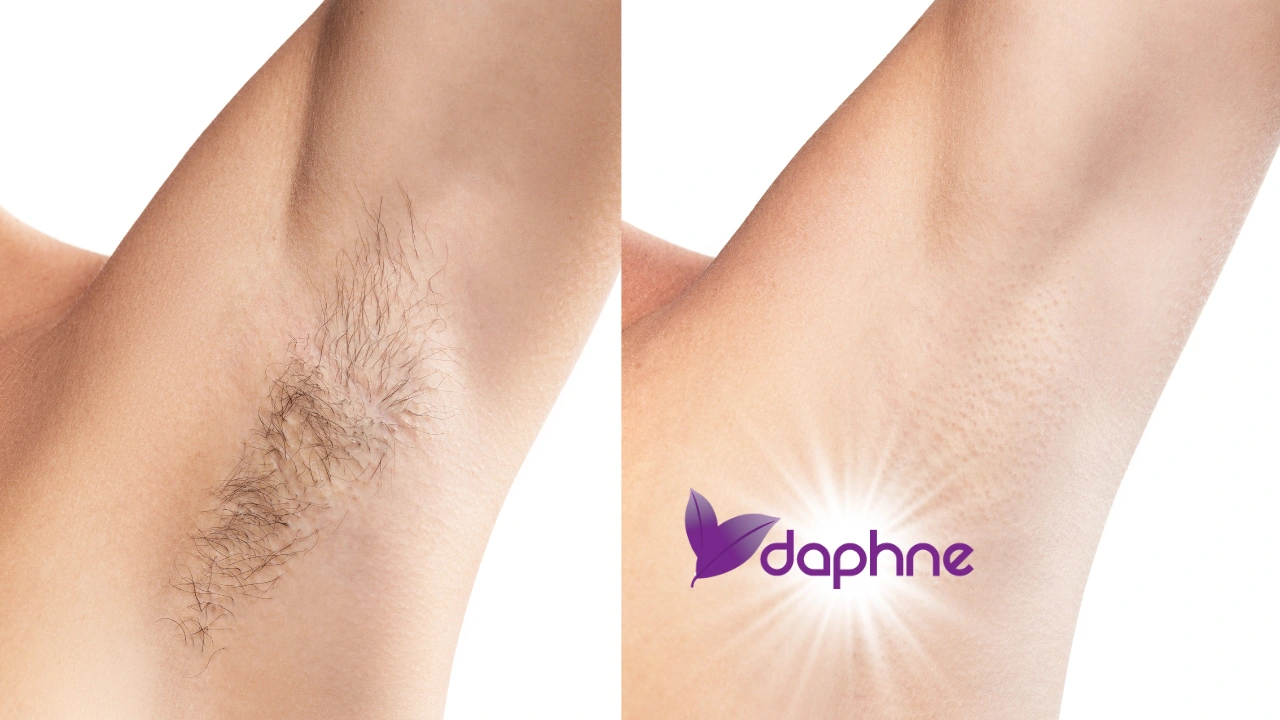
Short answer:
Laser hair removal can permanently reduce the number of hairs that regrow after a completed treatment course.
It should not be interpreted as a guarantee that every hair will disappear forever.
Most people should expect fewer hairs, slower regrowth and finer remaining hair.
Some people remain largely hair-free for months or years, while others experience new or renewed growth and benefit from occasional maintenance treatments.
The result depends on the contrast between the hair and skin, hair thickness, treatment area, hormonal activity, laser technology, treatment settings and session regularity.
Dark, coarse hair usually provides the clearest target because it contains more melanin.
In everyday language, “permanent hair removal” often suggests that every treated hair disappears completely and can never return.
Laser treatment does not support such an absolute promise.
The more accurate term is permanent hair reduction.
The United States Food and Drug Administration defines this as a long-term, stable reduction in the number of hairs that regrow after completing a treatment regimen.
This definition refers to a lasting decrease in hair count rather than guaranteed lifelong removal of every follicle.
| Expression | What it suggests | Realistic interpretation |
|---|---|---|
| Permanent hair removal | Every hair disappears forever | This cannot be guaranteed with laser treatment. |
| Permanent hair reduction | A stable long-term decrease in regrowing hair | This is the more accurate description of successful laser treatment. |
| Maintenance treatment | Occasional treatment of later regrowth | It may be useful when scattered or hormonally stimulated hair appears. |
Laser hair removal uses concentrated light energy to target melanin inside suitable hair.
The pigment absorbs the laser energy and converts it into heat.
This controlled heat affects structures within the follicle that are involved in future hair growth.
Treated hair does not necessarily disappear during the session.
It usually sheds gradually over the following days or weeks.
As the treatment series progresses, regrowing hair may become less dense, thinner and slower growing.
Important:
The laser needs a suitable pigment target.
Dark, visible and sufficiently thick hair generally responds more predictably than white, grey, very blonde, red or extremely fine hair.
Melanin gives hair much of its colour and absorbs the laser energy.
When a hair contains very little or no melanin, the laser cannot distinguish and heat the follicle as effectively.
Dyeing a white or grey hair does not create pigment inside the follicle and therefore does not make it a reliable laser target.
Hair follicles do not all grow actively at the same time.
Each follicle passes through growth, transition and resting phases.
Laser treatment is generally most effective when the hair is in an active growth phase and remains connected to the structures being targeted.
During one appointment, only a proportion of the hairs in a treatment area are in the most responsive phase.
Other follicles may be resting and become active later.
Repeated sessions are therefore scheduled to reach new groups of growing hairs.
No.
A single session may produce visible shedding and temporarily slower growth, but it cannot reach every follicle in the correct growth phase.
A structured course is necessary for meaningful long-term reduction.
There is no universal number that applies to everyone.
Many treatment plans involve approximately six to eight sessions, while facial, hormonal or densely haired areas may require more.
The interval and total number should be adjusted according to the body area, regrowth pattern, hair quality and skin response.
Yes, some hair may grow again after laser treatment.
This does not necessarily mean that the treatment failed.
The regrowth may come from incompletely disabled follicles, follicles that were inactive during earlier sessions or new growth stimulated by hormonal and biological changes.
Returning hair is frequently:
Hair growth is a biological process that can change throughout life.
Pregnancy, menopause, polycystic ovary syndrome, thyroid conditions, medication changes, ageing and other hormonal factors may stimulate new or previously inactive follicles.
The face, chin, jawline, neck, chest and abdomen can be more strongly influenced by hormones.
These areas may require longer follow-up than areas with thick, stable body hair such as the underarms or lower legs.
A successful laser course should be evaluated by more than whether a few hairs remain.
Useful result indicators include a decrease in total hair density, reduced thickness, slower regrowth and less frequent shaving.
Many people remain largely hair-free for months or even years.
When regrowth occurs, it is often less noticeable.
However, results differ substantially between individuals and treatment areas.
Realistic goal:
Expect progressive, long-term hair reduction rather than instant or guaranteed lifelong removal of every hair.
Treated hairs usually begin to shed after the session rather than falling out immediately.
As additional growth cycles are treated, the intervals between shaving often become longer and the total amount of visible hair decreases.
No.
Excessively aggressive settings do not guarantee a better or more permanent result.
They can increase the risk of burns, blistering and pigment changes.
Effective treatment requires suitable technology, carefully selected parameters, adequate cooling and correct session timing.
| Hair type | Expected laser response | Reason |
|---|---|---|
| Dark and coarse hair | Usually the most predictable | It contains a strong melanin target. |
| Medium brown hair | Can respond well | The outcome depends on pigment, thickness and skin contrast. |
| Very fine hair | Often limited or unpredictable | It may not absorb enough energy safely and effectively. |
| Very blonde or red hair | Often poor or inconsistent | It contains less of the melanin targeted by standard systems. |
| White or fully grey hair | Generally not responsive | There is no suitable pigment target inside the hair. |
Hair colour alone is not sufficient.
Thickness, density, depth and the specific body area also affect whether treatment is appropriate.
Very fine facial or body hair should be assessed cautiously because poor candidate selection can produce little benefit and may rarely be associated with increased hair growth.
There is no single laser that gives the best result for every person.
The appropriate wavelength depends on skin tone, hair colour, hair thickness, treatment area, tanning history and individual sensitivity.
| Laser technology | Common wavelength | General planning consideration |
|---|---|---|
| Alexandrite laser | 755 nm | Often considered for lighter skin with dark, visible body hair. |
| Diode laser | Approximately 800–810 nm | Can support flexible treatment planning across selected skin and hair profiles. |
| Nd:YAG laser | 1064 nm | Often considered for darker skin types because of its lower absorption by superficial epidermal melanin. |
Technology choice alone does not determine permanence.
Correct settings, operator experience, cooling, session timing and candidate selection remain essential.
At Daphne Laser, Alexandrite, Diode and Nd:YAG technologies are selected according to the individual skin and hair profile.
Learn more about
Alexandrite laser hair removal,
Diode laser hair removal
and
Nd:YAG laser hair removal.
Maintenance sessions are not required at exactly the same frequency for everyone.
Some people maintain a stable result for long periods, while others notice scattered regrowth and choose occasional follow-up treatments.
Maintenance may be more likely when:
Maintenance should be based on meaningful regrowth rather than performed automatically at very short intervals.
The hair should be reassessed before each follow-up session.
Several factors determine how complete and stable the reduction will be:
Yes.
Waxing, sugaring, threading, plucking and epilating remove the hair from the follicle and temporarily eliminate the laser target.
Shaving cuts the hair at the surface while leaving the follicle available for the next treatment.
Recent tanning increases melanin in the skin and can reduce the contrast between the skin and hair.
This may require more conservative settings or postponement and can increase the risk of burns or pigment changes.
Sun exposure and tanning history should therefore be discussed before each session.
Facial hair can be reduced with laser when it is dark, visible and sufficiently thick.
However, facial areas are often more hormone-sensitive and may behave less predictably than coarse body hair.
Very fine, diffuse or peach-fuzz-like facial hair is frequently a poor target.
Treating unsuitable fine hair may produce limited improvement and is associated with a rare risk of paradoxical increased hair growth.
This is why the hair must be assessed before treatment.
At Daphne Laser, facial planning is conservative.
Diode or Nd:YAG systems may be considered according to the skin and hair profile, while Alexandrite laser is not used on the face.
For detailed information, visit
facial laser hair removal.
Body areas with dark, coarse hair often provide the most predictable long-term reduction.
The underarms, bikini area and lower legs commonly have stronger pigment and thicker hairs than many facial areas.
The back, shoulders, chest and abdomen can also respond well when the hair is suitable.
However, these areas may be influenced by hormones and may require a longer course or occasional maintenance.
Results should still be described as long-term reduction rather than guaranteed total removal.
Even a body area with an excellent initial response can develop scattered new growth later.
Daphne Laser does not promise that every hair will disappear forever.
The objective is a realistic, long-term reduction in hair density, thickness and regrowth speed.
Treatment planning considers:
Depending on these findings, Alexandrite, Diode or Nd:YAG laser technology may be selected.
Treatment parameters and session intervals are then adjusted according to the individual response.
Read our complete
guide to permanent laser hair reduction
or review general information about
laser hair removal.
Laser can produce a permanent reduction in the number of hairs that regrow after a treatment course.
It cannot guarantee complete lifelong removal of every hair.
Some hair may return.
Regrowth is often finer, lighter, slower and less dense than before.
Hormonal changes and individual biology can stimulate new growth later.
Results may remain stable for months or years.
Duration varies by person and treatment area, and occasional maintenance sessions may be required.
No.
Hair grows in different phases, so one session cannot treat every follicle at its most responsive stage.
Multiple sessions are needed.
Many treatment plans include approximately six to eight sessions.
Facial, hormonal or very dense areas may require more.
The final number depends on the individual response.
No single laser is best for everyone.
Alexandrite, Diode or Nd:YAG may be selected according to skin tone, hair colour, hair thickness, tanning and treatment area.
Alexandrite laser can provide strong long-term reduction in suitable candidates, especially when lighter skin is combined with dark, coarse body hair.
Complete lifelong removal cannot be guaranteed.
Diode laser can provide long-term or permanent hair reduction when the hair and skin profile is suitable and a complete treatment course is followed.
Nd:YAG laser can produce long-term hair reduction, particularly in appropriately selected candidates with darker skin types and dark, coarse hair.
Results remain individual.
Standard hair-removal lasers do not reliably treat white or fully grey hair because it lacks the melanin needed as a target.
Dyeing the visible hair does not add pigment inside the follicle.
No.
Maintenance may be needed because follicles can recover or new hair growth can be stimulated by hormonal and biological changes.
A small amount of later regrowth does not erase the reduction achieved during the main course.
Both methods can reduce hair by targeting pigment, but they use different light technologies.
The result depends on the device, settings, hair quality, skin type and operator experience rather than the technology name alone.
Does laser really remove hair permanently?
Laser hair removal can create a stable, long-term reduction in unwanted hair, but it cannot guarantee that every hair will disappear forever.
A successful treatment course usually produces fewer hairs, thinner regrowth and longer intervals between shaving.
Dark, coarse hair generally responds best, while white, grey, very blonde, red and extremely fine hair responds poorly or unpredictably.
Multiple sessions are required because hair follicles grow in different phases.
Hormonal changes and individual biology can also cause new or renewed growth, making occasional maintenance sessions useful for some people.
Realistic expectations, careful skin and hair assessment, appropriate laser selection and correctly timed sessions are more important than promises of “100% permanent” hair removal.
View the current
laser hair removal prices
or
contact Daphne Laser
for an individual assessment.
Munich · Full Body · Women and Men · Area-Based Plan Full…
Devamını oku
Laser hair removal guide · Alexandrite · Diode · Nd:YAG Laser hair…
Devamını oku
Munich · Women and Men · Neck and Nape Laser Hair Removal…
Devamını okuRequired for security, navigation and saving your choice. Always active.
Enables additional features, fonts and user-friendly services.
Helps us understand how the website is used with anonymised or pseudonymised data.
Measures campaigns and may associate visits across websites.
Loads embedded maps and videos from third-party providers.