
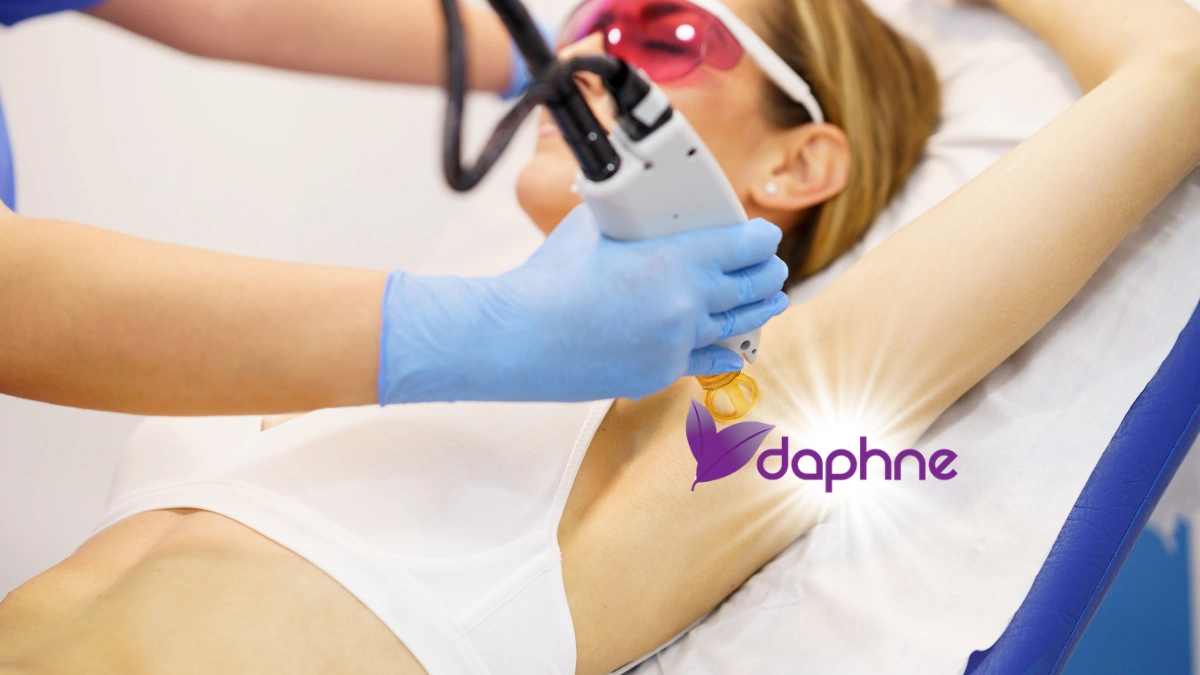
Laser hair removal for women is a laser hair removal treatment that uses laser energy to target melanin within the hair and the hair follicle, with the aim of achieving significant and long-term reduction of unwanted hair. With regular sessions, hair may grow back less densely, more slowly, and remaining hairs may become finer over time.
Laser hair removal for women can be performed on many different areas, including underarms, bikini and intimate area, legs, arms, face, neck, back and abdomen. The treatment plan should be assessed separately for each area according to hair color, hair thickness, hair density and skin tone.
The same laser system is not the best choice for every woman. Alexandrite, Diode and Nd:YAG lasers may offer different advantages depending on skin tone, tanning status, hair color, hair thickness, follicle depth and treatment area. For this reason, we select the laser system according to the individual’s skin and hair characteristics.
Areas where fine hair may be present, particularly the face, chin, neck and upper arms, require more careful assessment. Very fine, very light-colored, white or gray hair contains less melanin, so the effectiveness of laser hair removal may be more limited.
The number of sessions and the interval between treatments may vary according to the treatment area, the hair growth cycle, hormonal factors and the individual’s response to laser treatment. Effective skin cooling can help reduce sensations of heat, stinging and discomfort during treatment.
Laser Hair Removal for Women
Laser hair removal for women uses laser energy to target hair follicles with the aim of achieving significant and long-term reduction of unwanted hair. The most commonly treated areas include the underarms, bikini and intimate area, legs and face. The treatment plan should be determined individually according to skin tone, hair color, hair thickness, treatment area and hormonal factors.
Underarms
The underarms are one of the most commonly treated areas for laser hair removal in women. Because the area is relatively small, treatment time is usually short, and both underarms can often be completed within a few minutes.
Bikini and intimate area
The bikini and intimate area are among the areas frequently chosen for laser hair removal by women. Because this is a sensitive area, skin tone, hair thickness, energy settings and effective skin cooling are particularly important.
Legs
Treatment can be performed on the lower legs, upper legs or full legs. A full-leg treatment may take approximately 40 minutes, although the duration varies depending on the device used, treatment technique and hair density.
Face
Laser hair removal can be performed on the upper lip, chin, cheeks and other facial areas. However, facial hair may be more strongly influenced by hormonal factors, so a longer treatment course may be required compared with body areas. Fine facial hair should also be assessed carefully.
Hair should not be removed from the root between sessions
The hair follicle needs to remain present for the laser to target it effectively. For this reason, methods that remove hair from the root, such as waxing, epilators or tweezers, should not be used between sessions. If needed, shaving may be used instead.
Laser selection should be individual
The same laser system is not the best option for every body area and every skin type in women. The choice between Alexandrite, Diode or Nd:YAG should be made according to skin tone, tanning status, hair color, hair thickness and treatment area.
Sun protection is important
It is important to avoid intense sun exposure before and after laser hair removal. Tanning status should be assessed before treatment. Especially on areas exposed to the sun, appropriate sun protection can help reduce the risk of unwanted skin reactions.
The number of sessions may vary by area
Because not all hairs are in the active growth phase at the same time, laser hair removal is performed over multiple sessions. The number of sessions may vary according to treatment area, hair characteristics, hormonal status and the individual’s response to treatment.
In short: Laser hair removal for women can be performed on many different areas, particularly the underarms, bikini and intimate area, legs and face. The most appropriate laser system and session plan should be individually selected according to the skin and hair characteristics of each area.
Can You Have Laser Hair Removal If You Have a Cyst?
Having an ovarian cyst by itself is not a contraindication to laser hair removal. The energy used in laser hair removal targets the hair and hair follicle within the skin and does not reach deeper internal organs such as the ovaries. Therefore, the presence of an ovarian cyst is generally not considered a direct contraindication to laser hair removal.
Laser energy does not reach the ovaries
Laser hair removal acts in the skin where the hair follicles are located. The laser energy used does not penetrate deeply enough to reach the ovaries or other internal organs located much deeper in the abdomen and pelvis.
An ovarian cyst and PCOS are not the same thing
Having a cyst on an ovary does not always mean that a hormonal problem is present. Polycystic ovary syndrome (PCOS), however, is a different condition that should be assessed separately because of its hormonal features and its association with increased hair growth.
Hormonal hair growth can affect the result
If increased hair growth is related to hormonal factors, new hairs may appear despite laser hair removal, or additional sessions may be required in some areas. This is not caused by the laser affecting internal organs, but by hormonal processes that influence hair growth.
Cysts directly on the skin should be assessed separately
If there is a cyst, active infection, inflamed lesion or unexplained skin change directly on the skin within the area to be treated, that area should be assessed before laser is applied directly over it.
In short: People with ovarian cysts can generally have laser hair removal. Laser energy does not reach the ovaries and does not affect an ovarian cyst. However, if there is accompanying PCOS or another hormonal condition, its effect on hair growth and laser hair removal results should be assessed separately.
Does Laser Hair Removal Damage the Ovaries?
Laser hair removal is not expected to damage the ovaries. The light energy used in laser hair removal targets the hair and hair follicle within the skin. The ovaries are located much deeper within the abdomen and pelvis, so laser hair removal energy does not reach the ovaries.
Laser energy does not reach the ovaries
The area of effect of laser hair removal is limited to skin tissue where the hair follicles are located. The energy does not penetrate deeply enough to reach the ovaries, uterus or other internal organs within the pelvis.
Intimate-area laser is also applied to the external skin
Laser hair removal of the intimate area is applied only to the external hair-bearing skin. The treatment is not directed at internal reproductive organs such as the uterus or ovaries.
Ionizing radiation is not used
Laser hair removal devices do not use ionizing radiation such as X-rays. Instead, light energy at a specific wavelength is applied so that it can be absorbed by pigment in the hair and the hair follicle.
A direct effect on fertility is not expected
Because laser energy does not reach ovarian or uterine tissue, laser hair removal is not expected to directly affect ovarian function or fertility.
An ovarian cyst is not a direct barrier to laser hair removal
An ovarian cyst is located much deeper than the surface of the skin. Therefore, having an ovarian cyst by itself is not a direct barrier to laser hair removal. However, if an accompanying hormonal condition is present, its effect on hair growth and treatment response should be assessed separately.
Hormonal factors can affect laser hair removal results
PCOS or other hormonal conditions can affect the results of laser hair removal, not because the laser reaches the ovaries, but because hormones influence hair growth. In these cases, additional sessions or maintenance treatments may be required for some areas.
In short: Laser hair removal targets hair follicles in the skin and does not reach the depth where the ovaries are located. Even during intimate-area treatments, laser is applied to the external skin. Therefore, laser hair removal is not expected to damage the ovaries or directly affect fertility.
Laser Hair Removal for Women Prices in Munich
The price is determined by the selected treatment area and package. The choice of laser system does not change the list price for the same area.
| Area | 1 Session | 3 Sessions | 6 Sessions |
|---|---|---|---|
| Upper Lip | €35 | €95 | €168 |
| Chin | €45 | €122 | €216 |
| Full Face | €99 | €267 | €475 |
| Underarms | €59 | €159 | €283 |
| Lower Arms to Elbows | €89 | €240 | €427 |
| Full Arms | €139 | €375 | €667 |
| Classic Bikini Line | €79 | €213 | €379 |
| Brazilian / Full Intimate Area | €119 | €321 | €571 |
| Lower Legs Including Knees | €159 | €429 | €763 |
| Full Legs | €239 | €645 | €1,147 |
Laser Hair Removal for Women in Other Languages
You can read the same information about laser hair removal for women in our other language versions.