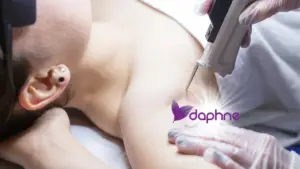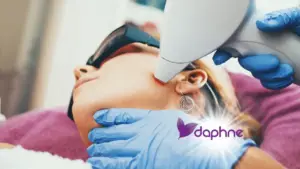
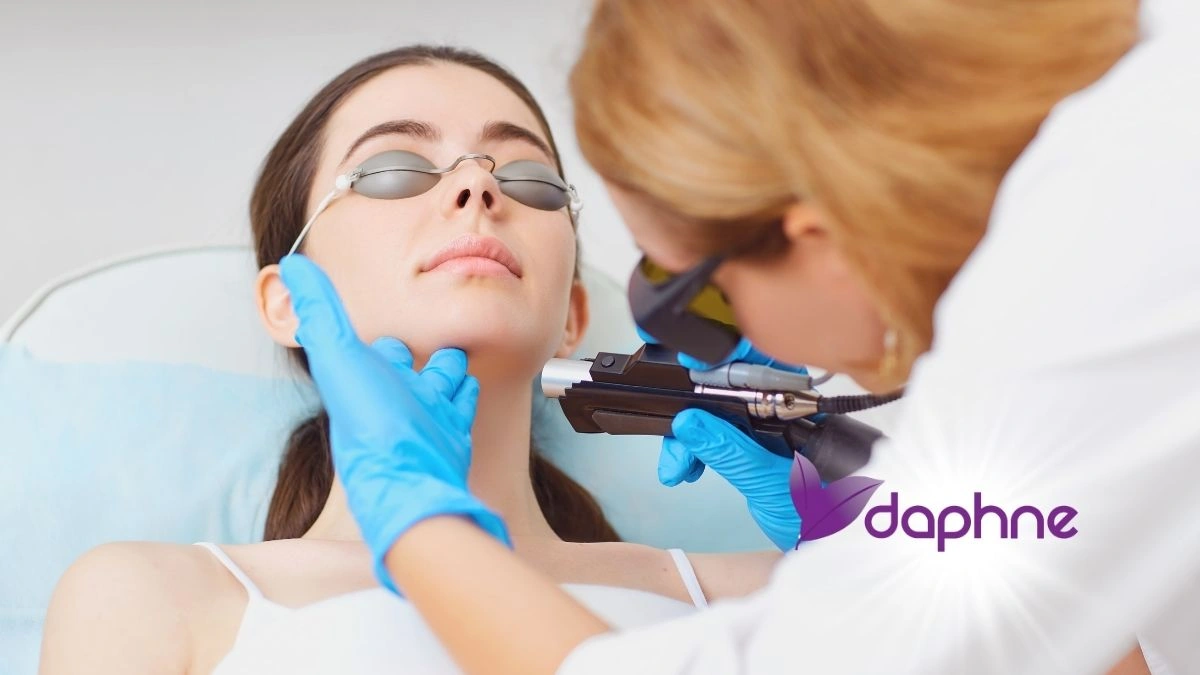
Nd:YAG laser hair removal is one of the laser hair removal methods that uses laser energy at a 1064 nm wavelength to target the hair follicle. This wavelength can penetrate deeper into the skin than Alexandrite and Diode lasers and can be particularly effective for deeply rooted and coarse hair.
Because Nd:YAG laser energy is absorbed to a lesser extent by melanin in the epidermis, it can offer an important advantage particularly for darker skin tones. For this reason, with the appropriate device, energy settings and skin assessment, it is one of the laser systems frequently considered for medium to darker skin types.
Skin tone and the current level of tanning should also be assessed carefully on tanned skin or skin that has recently been exposed to the sun. Although Nd:YAG laser may offer advantages over some other laser systems on darker skin, this does not mean that it is risk-free on every skin type. Appropriate energy, pulse duration and cooling settings should be selected individually.
Nd:YAG laser can be used on various body areas such as the back, shoulders, legs, underarms and intimate area, where deep and coarse hair may be present. Laser hair removal may be less effective on very fine, very light-colored, white or gray hair because these hairs contain less melanin.
Because Nd:YAG laser reaches deeper tissues, sensations of heat or stinging during treatment may be more noticeable for some people compared with other laser systems. Effective skin cooling can help reduce these sensations. We select the laser system individually according to skin tone, tanning status, hair color, hair thickness, follicle depth and treatment area.
What Is Nd:YAG Laser Hair Removal?
Nd:YAG laser hair removal is one of the laser hair removal methods that uses laser energy at a wavelength of 1064 nm to target hair follicles. This wavelength can penetrate deeper into the skin and is absorbed to a lesser extent by melanin in the epidermis than shorter wavelengths such as Alexandrite. For this reason, it can offer advantages particularly for darker skin tones and deeply rooted hair.
Uses a 1064 nm wavelength
The 1064 nm wavelength of Nd:YAG laser allows laser energy to reach deeper tissues within the skin. This characteristic may provide an advantage particularly when targeting deeply rooted and coarse hair follicles.
May be advantageous for darker skin tones
Nd:YAG laser energy is absorbed to a lesser extent by melanin at the skin surface, which can be an important advantage for darker skin tones. Nevertheless, energy settings must still be carefully adjusted according to the skin on darker or tanned skin.
Can target deeply rooted hair
Because its wavelength can penetrate deeper, Nd:YAG laser can be an effective option particularly for deeply rooted and coarse hair. It can be used on different body areas such as the back, legs, shoulders, underarms and intimate area.
Tanned skin requires careful assessment
Nd:YAG laser may be more suitable for tanned or darker skin than some other laser systems. However, this does not mean that treatment on tanned skin is completely risk-free. Current tanning status, recent sun exposure and skin tone should be assessed before treatment.
Effectiveness may be limited on very light hair
For laser hair removal to be effective, sufficient pigment within the hair is important. Very light-colored, white or gray hair contains less melanin, so the effectiveness of Nd:YAG laser may also be limited.
Treatment sensation varies from person to person
Because Nd:YAG laser reaches deeper tissues, sensations of heat or stinging during treatment may be more noticeable for some people. Effective skin cooling can help reduce these sensations.
In short: Nd:YAG laser is a laser hair removal system that uses a 1064 nm wavelength to reach deeply rooted hair and may offer particular advantages for darker skin tones. The most appropriate laser should be selected individually according to skin tone, tanning status, hair color, hair thickness and treatment area.
Is Nd:YAG Laser Hair Removal Permanent?
Nd:YAG laser hair removal can provide significant and long-term hair reduction in suitable skin and hair types. However, no laser system guarantees that all hair will disappear completely for life. As sessions progress, hair density may decrease, the interval before regrowth may become longer and remaining hairs may become finer.
Long-term hair reduction is the goal
The aim of Nd:YAG laser is to target hair follicles during the active growth phase with laser energy and gradually reduce their ability to produce hair. The result should be considered not as the complete disappearance of all hair, but as significant and long-term hair reduction.
Can be effective on deeply rooted hair follicles
Because the 1064 nm wavelength can penetrate deeper into the skin, it may offer advantages particularly when targeting deeply rooted and coarse hair. With appropriate parameters, long-term reduction in hair density may be achieved.
Multiple sessions are required
Because not all hairs are in the active growth phase at the same time, one session is not sufficient. Depending on hair characteristics, skin tone, treatment area and individual response, a treatment course consisting of multiple sessions is generally required.
Remaining hair may become finer
As the treatment course progresses, hair may grow back less densely, more slowly and remaining hairs may become finer. The degree of this change may vary from person to person and according to the treatment area.
Hormones can influence new hair growth
Hormonal changes, genetic characteristics, age and individual factors may cause previously inactive hair follicles to become active over time. For this reason, a small number of new hairs may appear in the same area even years later.
Maintenance sessions may be needed
After completing the initial treatment course, some people may require maintenance or touch-up sessions for new or occasional hairs that appear over time. This need depends on hormonal status, treatment area and the individual’s long-term response.
In short: Nd:YAG laser does not guarantee that all hair will disappear completely and permanently for life. With suitable skin and hair characteristics, regular sessions can provide significant and long-term hair reduction. Hormonal changes or hair follicles that become active over time may mean that some people require maintenance sessions.
What Is the Difference Between Nd:YAG and Alexandrite Laser?
The main differences between Nd:YAG and Alexandrite laser are the wavelength used, the depth of penetration into the skin and their interaction with melanin. Alexandrite laser uses a 755 nm wavelength and may be particularly advantageous for people with lighter skin and dark, coarse hair. Nd:YAG laser uses a 1064 nm wavelength, penetrates deeper and is absorbed to a lesser extent by melanin in the epidermis, which can make it a more suitable option for darker skin tones.
The wavelengths are different
Alexandrite laser operates at 755 nm, while Nd:YAG laser operates at 1064 nm. The longer wavelength of Nd:YAG laser can penetrate deeper into the skin. Alexandrite laser, on the other hand, is absorbed more strongly by melanin.
They offer different advantages for different skin types
Alexandrite laser can be particularly advantageous for people with a high contrast between lighter skin and dark hair. Because Nd:YAG laser is less affected by melanin in the epidermis, it is one of the systems frequently considered for darker skin tones.
Alexandrite can be strong on dark and coarse hair
The strong absorption of Alexandrite laser energy by melanin can help effectively target dark and coarse hair in suitable skin types. For this reason, it can be a strong option for areas such as the legs, underarms, bikini-intimate area and similar regions.
Nd:YAG may offer advantages for deeper hair follicles
The 1064 nm wavelength of Nd:YAG laser can reach deeper tissues and may therefore offer advantages when targeting deeply rooted and coarse hair follicles. This characteristic may be particularly important for darker skin tones.
Tanned and darker skin require careful laser selection
On tanned or darker skin, melanin within the skin can also absorb laser energy. For this reason, Alexandrite laser may require greater caution in some people, while Nd:YAG may be a more suitable option. Nevertheless, no laser system should be considered completely risk-free on tanned or darker skin.
Both have limitations on fine and light-colored hair
Very fine, very light-colored, white or gray hair contains less melanin. Therefore, both Alexandrite and Nd:YAG laser may have limited effectiveness on these hair types. In these areas, the assessment should consider not only the laser type, but also hair color, hair thickness and treatment area.
Treatment sensation may differ
With Alexandrite laser, effective skin cooling can help reduce sensations of heat and stinging during treatment. Because Nd:YAG laser penetrates deeper into tissue, heat or stinging sensations may be more noticeable for some people. Comfort levels vary individually.
The best laser depends on the individual
The choice between Alexandrite and Nd:YAG should not be based only on the device name. Skin tone, tanning status, hair color, hair thickness, follicle depth and treatment area should be assessed together. Alexandrite may be more suitable for some people, while Nd:YAG may be more appropriate for others.
In short: Alexandrite laser at 755 nm may be particularly advantageous for lighter skin with dark, coarse hair. Nd:YAG laser at 1064 nm penetrates deeper and may be a suitable option for darker skin tones. The most appropriate system should be selected according to the individual’s skin and hair characteristics.
Nd:YAG Laser Hair Removal Prices in Munich
Our Munich prices vary according to the treatment area, not the name of the laser system. Therefore, choosing Nd:YAG does not increase the price of the same treatment area.
The tables below provide current examples for commonly evaluated areas. However, after assessing the skin, our team may recommend a different laser system.
Women’s Nd:YAG Laser Price Examples
| Area | 1 Session | 3 Sessions | 6 Sessions |
|---|---|---|---|
| Front Neck | €59 | €159 | €283 |
| Underarms | €59 | €159 | €283 |
| Full Intimate Area | €119 | €321 | €571 |
| Full Back | €189 | €510 | €907 |
| Full Legs | €239 | €645 | €1,147 |
Men’s Nd:YAG Laser Price Examples
| Area | 1 Session | 3 Sessions | 6 Sessions |
|---|---|---|---|
| Front Neck | €71 | €192 | €341 |
| Underarms | €71 | €192 | €341 |
| Full Intimate Area | €143 | €386 | €686 |
| Full Back | €227 | €613 | €1,090 |
| Full Legs | €287 | €775 | €1,378 |
Nd:YAG Laser Hair Removal in Other Languages
You can read the same information about Nd:YAG laser hair removal in our other language versions.