Laser Hair Removal
Bikini Intimate Laser Hair Removal
Munich · Women and Men · Intimate Laser Hair Removal Intimate area…
Devamını oku
Enter a search term and press Enter. Results will open on the search page.
Tag
Can you have laser hair removal with hemorrhoids?
Yes, laser hair removal may still be possible if you have hemorrhoids.
Having hemorrhoids alone does not automatically rule out treatment.
However, active bleeding, significant pain or irritated skin requires more caution.
Laser should only be applied to suitable, intact external skin with hair.
In short:
Hemorrhoids are not automatically a contraindication to laser hair removal.
Treatment on unaffected areas of the body can usually continue normally.
Extra care is required when the treatment area is close to the anus.
Active bleeding, severe swelling or painful inflammation should be assessed before treatment.
No.
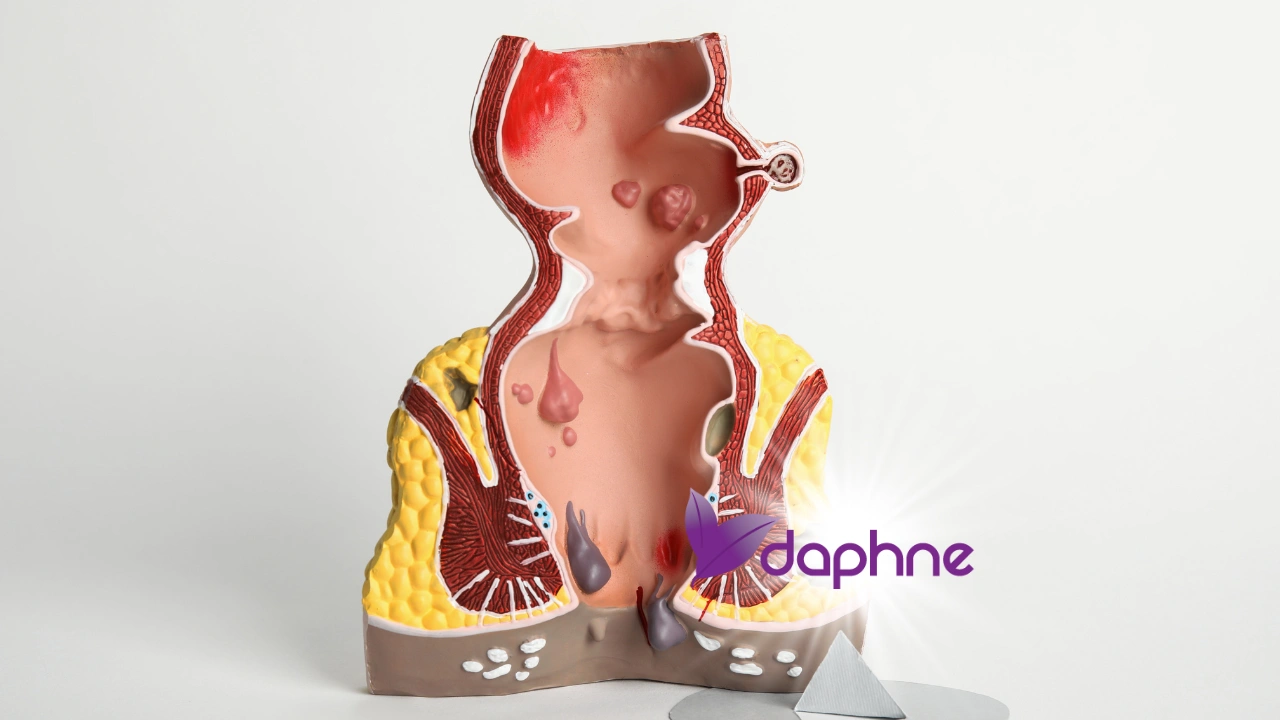
Hemorrhoids are a localized condition involving enlarged vascular tissue around the anus and lower rectum.
Some people have no noticeable symptoms.
Others may experience itching, discomfort, swelling or bleeding.
Laser hair removal works differently.
The laser targets pigment within the hair.
Its energy is converted into heat inside the follicle.
The purpose is to reduce future hair growth.
Therefore, the presence of hemorrhoids does not automatically make every body area unsuitable for laser treatment.
The actual skin being treated must be assessed separately.
For general information about the procedure, visit our
Laser Hair Removal
page.
In many cases, yes.
Hemorrhoids affect the anal region and do not automatically exclude the entire bikini or external intimate area.
Laser hair removal is performed on suitable external skin where hair is present.
Internal mucosal tissue is not part of a cosmetic hair removal treatment.
If the external bikini area is healthy and free from irritation, it may still be suitable for treatment.
Areas very close to symptomatic hemorrhoids require individual assessment.
Hair may grow on the external skin surrounding the anus.
This outer skin can sometimes be treated when it is healthy and intact.
The internal anal canal is different.
Mucosal tissue is not treated with a cosmetic epilation laser.
The treatment boundary should therefore be clearly defined.
Visible hemorrhoidal tissue, bleeding areas and damaged skin should be avoided.
Active bleeding is a reason to postpone treatment around the affected area.
The skin and surrounding tissue should first be allowed to settle.
The cause of bleeding may also require medical assessment.
Hemorrhoids can cause rectal bleeding.
However, rectal bleeding should not automatically be assumed to come from hemorrhoids.
New, persistent or significant bleeding should be evaluated medically.
Laser hair removal near the area can be reconsidered after the problem has resolved.
Painful hemorrhoids require greater caution.
A swollen or painful anal region may already be highly sensitive.
Adding a cosmetic laser procedure nearby may create unnecessary discomfort.
For this reason, treatment close to the affected area is usually better postponed until symptoms improve.
This does not necessarily affect distant body areas.
For example, hemorrhoids do not normally prevent laser hair removal on the legs, arms or underarms.
A thrombosed external hemorrhoid can cause sudden swelling and considerable pain.
The area may become extremely sensitive.
Laser hair removal close to an acutely thrombosed hemorrhoid should be postponed.
The immediate priority is assessment and recovery of the painful condition.
Once the swelling and tenderness have resolved, the surrounding external skin can be reassessed for treatment.
No.
An epilation laser is designed to target hair follicles.
Hemorrhoidal tissue itself is not a treatment target.
The laser should only be used on appropriate external skin containing suitable hairs.
Symptomatic hemorrhoids, mucosal tissue and abnormal skin changes should be avoided.
Laser hair removal should never be confused with medical procedures used to treat hemorrhoids.
The decision depends more on the condition of the skin than on the diagnosis of hemorrhoids itself.
Treatment around the area should generally be postponed when there is:
Once the skin has recovered, suitability can be assessed again.
Yes.
Hemorrhoids are localized to the anal region.
They usually have no direct effect on laser hair removal elsewhere.
Depending on the person’s skin and hair, areas such as the following may still be treated:
Each body area should be assessed according to its own skin condition.
The products you are using should be mentioned before treatment.
Hemorrhoid creams may contain different active ingredients.
Some can temporarily irritate or alter sensitive skin.
If a cream is being used close to the laser treatment area, the skin should be clean before the session.
Fresh topical products should not remain on the area being treated.
If the skin has become red or irritated, treatment may need to be delayed until it returns to normal.
There is no single waiting period that applies to every procedure.
The surgical area should first heal completely.
There should be no active bleeding, open wound or significant tenderness.
The required recovery time depends on the type of treatment performed and individual healing.
If the intended laser area is close to a recent surgical site, medical clearance may be appropriate before proceeding.
No.
These are entirely different procedures.
Laser hair removal targets pigment inside hairs and their follicles.
Its purpose is long-term hair reduction.
Medical treatment for hemorrhoids targets hemorrhoidal tissue and its blood supply.
Different surgical or energy-based methods may be used for that purpose.
A laser used for hair removal should therefore not be considered a treatment for hemorrhoids.
Yes, especially when planning treatment of the bikini or perianal area.
This information helps define safe treatment boundaries.
You should also mention recent:
The purpose is not to automatically exclude you from laser treatment.
It allows the treatment area to be assessed more accurately.
Laser hair removal is not designed to interact with hemorrhoidal tissue.
When treatment is limited to suitable external skin, hemorrhoids themselves are not the target.
However, treating skin that is already inflamed, painful or damaged could add unnecessary irritation.
That is why active symptoms near the planned treatment area should be allowed to settle first.
Proper assessment and clear treatment boundaries reduce unnecessary risk.
Medical assessment is advisable when symptoms are unusual, severe or persistent.
Examples include:
These symptoms should be evaluated independently of any planned cosmetic procedure.
Can you have laser hair removal with hemorrhoids?
Yes, in many situations you can.
Hemorrhoids alone do not mean that laser hair removal must be avoided altogether.
The key factor is the condition of the actual treatment area.
Healthy external skin may still be suitable for laser treatment.
Active bleeding, severe pain, inflammation or open skin should be allowed to resolve first.
The internal anal mucosa and hemorrhoidal tissue are not treatment areas for an epilation laser.
Only suitable external skin containing hair should be treated.
If symptoms are severe or the cause of bleeding is uncertain, medical evaluation should come before cosmetic laser treatment.
For more information about treatment planning, technologies and suitable areas, visit our
Laser Hair Removal
page.
Munich · Women and Men · Intimate Laser Hair Removal Intimate area…
Devamını okuRequired for security, navigation and saving your choice. Always active.
Enables additional features, fonts and user-friendly services.
Helps us understand how the website is used with anonymised or pseudonymised data.
Measures campaigns and may associate visits across websites.
Loads embedded maps and videos from third-party providers.