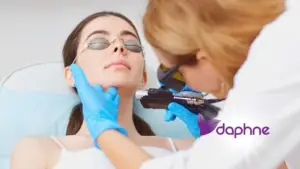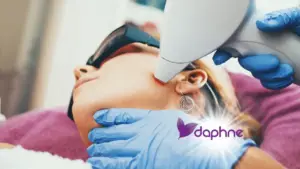
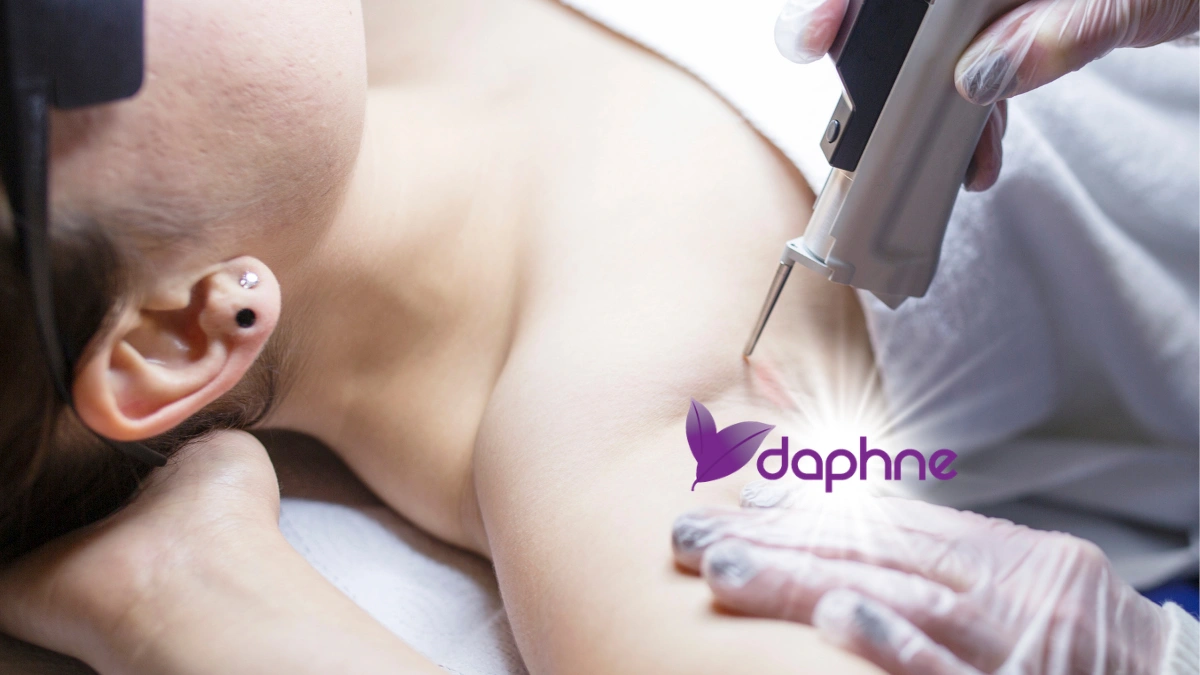
Laser hair removal targets melanin in the hair follicle with concentrated laser light. The melanin absorbs this energy and converts it into heat. As a result, the heat weakens the hair follicle over time. Regular sessions can therefore provide long-term hair reduction.
How does laser hair removal work?
Which laser types do we use?
Alexandrite at 755 nm, Diode at about 805–810 nm and Nd:YAG at 1064 nm are common options. However, one laser does not suit every skin and hair type. Therefore, we select the technology according to your individual characteristics.
How does the laser affect the hair follicle?
Melanin in the hair absorbs the laser light. Next, the energy quickly converts into heat. This heat mainly affects hairs in the active growth phase.
How many sessions are usually needed?
Many body areas require around 6–8 sessions. Facial areas, however, may need more treatments. In addition, hormones and hair structure can change the total number of sessions.
What should you do before and after treatment?
First, avoid waxing, plucking and epilating before your session. In addition, avoid recent tanning and strong sun exposure. Afterwards, protect the treated skin from sun and excessive heat.
What to Consider Before and After Laser Hair Removal
Proper preparation supports the treatment and helps protect the skin. In addition, the skin needs time to recover after each session. Good aftercare can therefore reduce unnecessary irritation and improve comfort.
Before Laser Hair Removal
Do not remove hair from the root
Avoid waxing, plucking and epilating before your sessions. These methods remove the hair from the follicle. However, the laser needs melanin in the hair follicle as its target. Therefore, stop root-removal methods about four weeks before treatment.
Shave the treatment area
Shave the treatment area shortly before your appointment. In many cases, shaving about 12–24 hours beforehand is sufficient. However, your practitioner may recommend a different timing for a specific area or device.
Avoid tanning
Avoid intense sun exposure and tanning beds before your session. Tanning increases melanin in the skin. As a result, recent tanning can affect the choice of safe laser settings.
Keep the skin clean
Do not apply perfume, deodorant or lotion to the treatment area on the day of your session. Also remove make-up and heavy cosmetic products. This allows the procedure to begin on clean, dry skin.
Tell us about your medications
Inform the practitioner about medicines you use regularly. In particular, mention any medication that may increase sensitivity to light. This information helps the team plan the treatment more safely.
After Laser Hair Removal
Avoid excessive heat
For the first 24–48 hours, avoid very hot showers, saunas and steam rooms. Heavy exercise may also increase irritation in sensitive skin. Instead, use lukewarm water until the skin feels calm.
Avoid scrubs and strong friction
Do not rub the treated skin aggressively after the session. Also avoid scrubs, rough exfoliation and irritating products at first. This gives the skin time to recover.
Protect the skin from the sun
Protect the treated area from strong direct sunlight. In addition, use suitable high-level sun protection on exposed areas. Especially during the first days, avoid deliberate tanning.
Use gentle skin care
Mild redness or sensitivity may occur after treatment. If needed, a gentle moisturiser can help soothe the skin. However, contact the treating team if stronger reactions continue.
Do not pluck shedding hairs
Treated hairs may shed naturally over the following days or weeks. Therefore, do not pull them out with tweezers or wax. If necessary, you can shave visible hairs between sessions.
Important: Skin type, laser system and treatment area can change the aftercare plan. Therefore, follow the individual instructions given by your treatment team.
Laser Hair Removal Sessions and Treatment Intervals
We plan the interval between sessions according to the hair growth cycle. Facial and body hair, however, do not grow at the same speed. Therefore, we do not use one fixed interval for every area. Facial sessions are often scheduled about 4–6 weeks apart. For many body areas, the interval is usually around 6–8 weeks.
Typical Session Intervals
Face
Facial hair often follows a faster growth cycle. Therefore, facial sessions are commonly planned about every 4–6 weeks.
Body Areas
Hair on the legs, arms, underarms and bikini area often grows more slowly. For this reason, treatment intervals are commonly around 6–8 weeks.
Later Sessions
Hair density may decrease as the treatment progresses. As a result, the time between sessions may become longer. In some cases, the next appointment may be planned after 8–12 weeks.
Total Number of Sessions and Treatment Timeline
Body Areas
Women may often need around 4–6 sessions for suitable body areas. Men may require about 6–10 sessions because hair can be denser. Overall, the treatment course usually continues for several months.
Face
Facial hair can be more strongly influenced by hormonal changes. Therefore, the face may require around 8–10 sessions. In addition, some people may need a longer treatment course.
Your treatment plan is individual: Hair colour, hair thickness, skin type and hormonal factors can affect both session number and timing. Therefore, we do not use the same schedule for every person.
Common Laser Hair Removal Technologies
Laser hair removal directs concentrated light energy toward melanin in the hair. The melanin absorbs the laser energy and converts it into heat. As a result, this heat can weaken the hair follicle. Repeated sessions can therefore reduce future hair growth over the long term.
Alexandrite Laser
Alexandrite lasers use a wavelength of 755 nm. This option can work particularly well with suitable light skin and dark hair. In addition, melanin absorbs 755 nm energy relatively strongly.
Diode Laser
Diode lasers commonly operate at about 805–810 nm. This wavelength allows the energy to reach deeper structures. In addition, suitable cooling systems can improve comfort during treatment.
Nd:YAG Laser
Nd:YAG lasers operate at 1064 nm. Melanin absorbs this wavelength less strongly. Therefore, Nd:YAG can be an important option when treating darker skin types.
Important: No single laser type gives the same result for everyone. Therefore, skin tone, hair colour, hair thickness and treatment area all influence the technology choice.
Laser Hair Removal Prices in Munich
Laser hair removal prices in Munich depend on the treatment area. First, the size of the area affects the cost. In addition, the selected package changes the total price. Daphne Laser does not add a surcharge simply because of the laser type used. Therefore, we publish transparent Euro prices for women and men.
| Area | Women · 1 Session | Women · 6 Sessions | Men · 1 Session | Men · 6 Sessions |
|---|---|---|---|---|
| Upper lip | 35 € | 168 € | 42 € | 202 € |
| Underarms | 59 € | 283 € | 71 € | 341 € |
| Full face | 99 € | 475 € | 119 € | 571 € |
| Full intimate area | 119 € | 571 € | 143 € | 686 € |
| Full legs | 239 € | 1,147 € | 287 € | 1,378 € |
Six-session packages provide an approximate 20 percent price advantage. Three-session packages, however, provide an approximate 10 percent advantage. You can also view all treatment areas and current prices on our laser hair removal prices page.
Price note: These Euro prices apply to our Munich centre. Prices may change over time. Therefore, the current list on the price page is always the reference.
Laser Hair Removal in Other Languages
You can also read information about laser hair removal in our other language versions. Each link below takes you directly to the corresponding page.